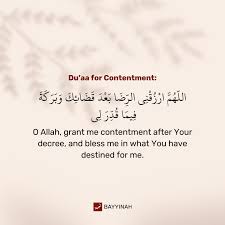
Contentment with the divine decree (al-riḍā bi-al-qaḍāʾ wa-al-qadar) is one of the highest levels of faith and among the noblest spiritual stations in Islam. It is the fruit of certainty in Allah and full submission to His will — a sign of true servitude and deep belief. Faith in destiny is one of the six pillars of faith, without which a believer’s faith is incomplete. The Prophet ﷺ said: “To believe in Allah, His angels, His books, His messengers, the Last Day, and to believe in the divine decree, both its good and its bad.”
Divine decree (qadar) refers to all that Allah has eternally decreed and known would occur. Contentment with it means that a believer’s heart rests in peace with whatever Allah decides, whether it pleases him or not.
Contentment is not merely patience; it is a higher degree. Patience means restraining oneself from complaint, while contentment means finding tranquility and serenity in the heart at the moment of trial. The patient person endures hardship, but the content one finds peace in Allah’s choice for him, knowing that Allah is more merciful to him than he is to himself. Allah says:
“No calamity befalls except by the permission of Allah; and whoever believes in Allah, He guides his heart. And Allah is Knowing of all things.”
(Qur’an, 64:11)
Whoever believes that all things happen according to Allah’s wisdom and decree will find peace and stability within.
Contentment does not mean abandoning effort or surrendering to laziness; it means that a Muslim strives for good, works hard, and if something unwanted happens, he accepts it with satisfaction, knowing that everything is in Allah’s hands. The Prophets are the best examples of this attitude. Prophet Ya‘qub (Jacob), after losing his sons, said in faith and surrender:
“So patience is most fitting. Perhaps Allah will bring them all to me. Indeed, it is He who is the Knowing, the Wise.”
(Qur’an, 12:83)
True contentment also means that a believer’s heart does not grieve excessively over lost wealth, missed opportunities, or unrealized dreams, because he knows that Allah’s decree is ultimately for his good — even when he does not yet understand it. Allah says:
“Perhaps you hate a thing and it is good for you; and perhaps you love a thing and it is bad for you. Allah knows, while you do not know.”
(Qur’an, 2:216)
Real satisfaction is seeing Allah’s wisdom in everything that happens, believing that what is meant for you will never miss you, and what misses you was never meant for you.
Contentment brings inner peace, calming the storms of sadness and anxiety. Many people live in misery because they object to Allah’s decree, while others live happily despite hardship because they are content. As the early Muslims said: “Whoever is pleased will have contentment, and whoever is displeased will have displeasure.” The one who surrenders his affairs to Allah lives peacefully, knowing that behind every decree is wisdom, and behind every trial is mercy.
Contentment with destiny does not take away human will or strength; it strengthens it. The believer who combines hard work with satisfaction is never defeated by circumstances. He neither despairs in loss nor becomes arrogant in success, because his heart is attached to Allah, not the world. Allah says:
“Say: Nothing will ever befall us except what Allah has written for us. He is our Protector, and upon Allah let the believers rely.”
(Qur’an, 9:51)
In the end, contentment with Allah’s decree is the secret to happiness in this world and salvation in the Hereafter. It is a great act of the heart that only the sincere reach — those whose trust in Allah is pure and whose faith is unshakable. Whoever tastes the sweetness of contentment lives in a spiritual paradise even before entering the eternal one. All of Allah’s decrees are just, all of His decisions are wise, and what is with Him is always better and everlasting.